The Floor · ประเทศไทย
ต้นทุนที่ซ่อนอยู่ · 2026
ต้นทุนที่แท้จริงของการจัดตารางงานแบบแมนนวลสำหรับ SMB ไทย
สี่ทุ่มคืนวันอาทิตย์ครับ แทนที่จะพักผ่อนเพื่อเตรียมตัวสำหรับสัปดาห์หน้า คุณกลับก้มหน้าจ้องมือถือ เลื่อนดูข้อความในกลุ่ม LINE ที่วุ่นวายไม่หยุด สำหรับเจ้าของธุรกิจร้านอาหาร ค้าปลีก และคลินิก การจัดตารางงานแบบแมนนวลดูเหมือน "ฟรี" แต่ในความเป็นจริง มันคือภาษีซ่อนเร้นมหาศาลที่ฉุดรั้งการเติบโตของธุรกิจคุณ
1. บทนำ: ต้นทุนที่มองไม่เห็นซึ่งกัดกินธุรกิจของคุณ
สี่ทุ่มคืนวันอาทิตย์ครับ แทนที่จะพักผ่อนเพื่อเตรียมตัวสำหรับสัปดาห์หน้า คุณกลับก้มหน้าจ้องมือถือ เลื่อนดูข้อความในกลุ่ม LINE ที่วุ่นวายไม่หยุด เห็นว่าพนักงาน 10 คน "อ่านแล้ว" ตารางงานใหม่ แต่มีแค่ 2 คนที่ยืนยัน คนหนึ่งส่งข้อความส่วนตัวมาขอสลับกะพรุ่งนี้เช้า ขณะที่อีกคนเพิ่งส่งสติกเกอร์ไปกลบตารางงานที่คุณโพสต์ไปเมื่อ 5 นาทีก่อน
ในฐานะเจ้าของธุรกิจที่เคยจัดตารางงานแบบ Manual มาหลายปี ผมเห็นเหตุการณ์แบบนี้ทุกวันครับ สำหรับเจ้าของธุรกิจร้านอาหาร ค้าปลีก และคลินิก การจัดตารางงานแบบแมนนวลดูเหมือน "ฟรี" เพราะไม่ต้องจ่ายค่าสมาชิก แต่ในความเป็นจริง มันคือภาษีซ่อนเร้นมหาศาลที่ฉุดรั้งการเติบโตของธุรกิจคุณ ความหงุดหริดที่ข้อความถูก "อ่านแล้ว" แต่ไม่มีใครตอบ ไม่ใช่แค่ปัญหาในโลกดิจิทัล แต่เป็นความล้มเหลวเชิงปฏิบัติการที่สูบเวลา เงิน และพลังจิตใจของคุณไปอย่างต่อเนื่องครับ
2. โจรขโมยเวลา: วิเคราะห์ช่องว่าง 2.3 ชั่วโมง
ข้อมูลจากตลาด SMB ในกรุงเทพฯ แสดงให้เห็นว่าการจัดตารางงานแบบแมนนวลคือ "โจรขโมยเวลา" ตัวฉกาจ ผู้จัดการไทยโดยเฉลี่ยใช้เวลา 2.3 ชั่วโมงต่อสัปดาห์ ในการจัดการกะ เมื่อคิดรวมทั้งปี นี่คือเวลาที่สูญเสียไปมากกว่า 100 ชั่วโมงของประสิทธิภาพการทำงานครับ
สำหรับผู้จัดการ เวลาเหล่านี้ถูกใช้ไปกับ:
- การสร้างตารางกะเริ่มต้นใน Excel หรือบนกระดาษ
- "LINE shuffle": การสื่อสารการเปลี่ยนแปลงและไล่ตามยืนยันในแชทที่กระจัดกระจาย
- การรับมือกับปัญหาที่ 89% ของผู้จัดการ รายงานว่าการเปลี่ยนกะกะทันหันคือปัญหาปวดหัวที่สุดเพียงอย่างเดียวของพวกเขา
ในภาคธุรกิจอาหารและเครื่องดื่ม ภาระนี้หนักยิ่งกว่าครับ สภาพแวดล้อมที่กดดันสูงและ 94% ของผู้จัดการร้านอาหาร ที่รายงานว่า "วุ่นวายช่วงวันหยุดสุดสัปดาห์และวันหยุดนักขัตฤกษ์" ทำให้เวลาจัดตารางงานพุ่งสูงถึง 3.1 ชั่วโมงต่อสัปดาห์
3. คำนวณต้นทุนค่าเสียโอกาส
ในฐานะเจ้าของธุรกิจ คุณต้องมองเวลาของคุณผ่านมุมมองของต้นทุนค่าเสียโอกาสครับ ด้วยอัตราค่าจ้างผู้จัดการมาตรฐานที่ 300 บาท/ชั่วโมง 2.3 ชั่วโมง ที่ใช้กับการจัดตารางงานแบบแมนนวลจะสร้าง "ภาษีแมนนวล" 33,120 บาทต่อปี
เปรียบเทียบกับโซลูชันเฉพาะทางอย่าง WorkCo ซึ่งใช้ฟรีได้เมื่อมีพนักงานไม่เกิน 20 คน ครบทุกฟีเจอร์ การเลือกทำแบบแมนนวลต่อไปก็เท่ากับเลือกที่จะเสียผลิตภาพหลายพันบาท ทั้งที่เครื่องมือระดับมืออาชีพเริ่มต้นได้ฟรี นี่ไม่ใช่แค่ปัญหาภายในองค์กร ความไม่มีประสิทธิภาพในการจัดตารางงานส่งผลให้สูญเสียผลิตภาพถึง 2.8 พันล้านบาท ต่อปีในกรุงเทพฯ เพียงแห่งเดียวครับ
งานวิจัยตลาดแสดงว่า 67% ของผู้จัดการ ยินดีจ่ายเพิ่ม 20-30% เพื่อเครื่องมือที่เชื่อมต่อกับ LINE โดยเฉพาะ พวกเขาตระหนักดีว่าวิธี "ฟรี" จริงๆ แล้วเป็นวิธีที่แพงที่สุดในการบริหารธุรกิจครับ
4. การสื่อสารล้มเหลว: พนักงานขาดงานและข้อความที่ถูกกลบ
ปัจจุบัน 48% ของธุรกิจไทย ใช้กลุ่ม LINE หรือ WhatsApp สำหรับจัดตารางงาน อย่างไรก็ตาม ผู้จัดการเหล่านี้ให้คะแนนความพึงพอใจกับวิธีนี้เพียง 3.2/10 เท่านั้นครับ
สาเหตุเป็นเรื่องเชิงโครงสร้างครับ ในกลุ่ม LINE ทั่วไป ข้อมูลกะที่สำคัญถูกกลบอยู่ใต้แชทสนทนาทั่วไปและสติกเกอร์อยู่ตลอดเวลา การขาดโครงสร้างนี้เป็นตัวขับเคลื่อนโดยตรงของ อัตราขาดงาน 71% ที่ผู้จัดการรายงาน เมื่อพนักงานพลาดกะเพราะ "ไม่เห็นข้อความ" ความเสียหายทางการเงินจะทวีคูณ:
- การหาคนมาทดแทนในนาทีสุดท้ายใช้เวลาเฉลี่ย 1.8 ชั่วโมง
- ความขัดข้องในการดำเนินงานและแรงงานที่สูญเสียไปมีต้นทุนประมาณ 3,200 บาทต่อเดือน
5. กับดักด้านกฎหมายแรงงานและการจ่ายเงินเดือน
การจัดตารางงานแบบแมนนวลยังทำให้คุณเผชิญความเสี่ยงสำคัญภายใต้ พ.ร.บ.คุ้มครองแรงงาน อีกด้วยครับ ข้อมูลแสดงว่า 67% ของผู้จัดการ ประสบปัญหากับการเตรียมเงินเดือนแบบแมนนวล ขณะที่ 58% พบว่าการติดตามโอทีมีโอกาสผิดพลาดสูงหากไม่มีเครื่องมือเฉพาะ
ในประเทศไทย ระบบจ่ายเงินเดือนแบบรายปักษ์ (แบ่งเป็นงวด 1-15 และ 16-สิ้นเดือน) สร้างภาระ 2.1 ชั่วโมงต่อสัปดาห์ อย่างสม่ำเสมอสำหรับผู้จัดการที่ต้องกระทบยอดชั่วโมงทำงานแบบแมนนวล หากไม่มีระบบที่เป็นโครงสร้าง การละเมิดข้อกำหนดบังคับเป็นเรื่องง่ายมากครับ:
- วันหยุดบังคับ: อย่างน้อย 1 วันต่อสัปดาห์
- ชั่วโมงทำงาน: สูงสุด 8 ชั่วโมงต่อวัน หรือ 48 ชั่วโมงต่อสัปดาห์
- ค่าล่วงเวลา: 1.5 เท่า สำหรับ OT ปกติ และ 3 เท่า สำหรับทำงานวันหยุด
ยิ่งไปกว่านั้น กฎหมายกำหนดให้นายจ้างต้องเก็บบันทึกการเข้างานอย่างน้อย 2 ปี การจัดการเรื่องนี้ด้วยกระดาษหรือในแชท LINE ที่ลบไปแล้ว ก็เหมือนระเบิดเวลาด้านกฎหมายแรงงานครับ
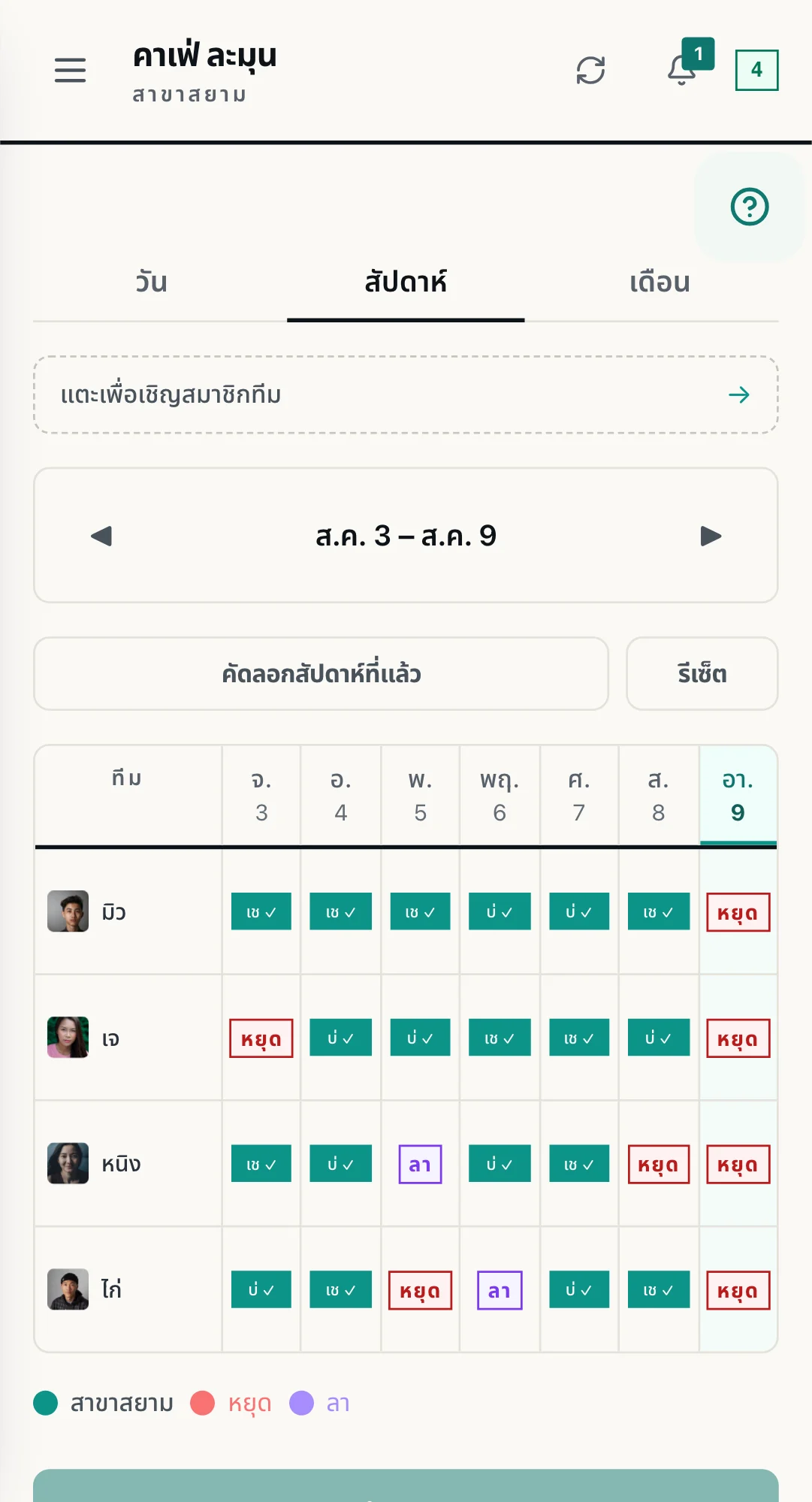
หน้าจอจริง · ตารางกะ
แทนที่ไฟล์ Excel และแชทกลุ่ม ทั้งสัปดาห์อยู่ในตารางเดียว คัดลอกสัปดาห์ก่อนได้ แล้วส่งครั้งเดียวครับ
6. เคล็ดลับปฏิบัติได้จริงสำหรับเจ้าของธุรกิจไทย
เพื่อเอาเวลาของคุณกลับคืนมาและปกป้องธุรกิจ ผมแนะนำ 4 ขั้นตอนที่ทำได้จริงครับ:
- หยุดใช้เอกสารที่อัปเดตไม่ได้: Excel และกระดาษไม่สามารถอัปเดตแบบเรียลไทม์ ทำให้เกิดปัญหาเวอร์ชันขัดแย้ง พนักงานดูตารางเก่า ขณะที่คุณดูตารางใหม่
- รวมศูนย์การสื่อสาร: ย้ายการมอบหมายกะออกจากกลุ่มแชททั่วไป เมื่อตารางงานปนอยู่กับสติกเกอร์และคุยเล่น ตารางงานจะสูญเสียความน่าเชื่อถือ
- ตรวจสอบเวลาบริหารงาน: ลองจับเวลาสัก 1 เดือนว่าคุณใช้เวลากี่นาทีในการแก้ตารางงาน โทรหาคนมาทดแทน และคำนวณเงินเดือนรายปักษ์ ต้นทุนรวมน่าจะทำให้คุณตกใจครับ
- ใช้เครื่องมือที่ทำงานบน LINE: เนื่องจาก 94% ของพนักงานไทย ใช้ LINE ทุกวัน อย่าบังคับให้พวกเขาโหลดแอปใหม่จากต่างประเทศ ใช้เครื่องมือที่อยู่ใน LINE เลยเพื่อให้ ไม่มีอุปสรรคในการเริ่มใช้งาน คุณไม่ได้ขอให้พวกเขาเรียนรู้แอปใหม่ แต่กำลังให้เวอร์ชันที่ดีกว่าของแอปที่พวกเขาเปิดดูวันละ 20 ครั้งอยู่แล้วครับ
7. บทสรุป: เอาเวลาเติบโตของคุณกลับคืนมา
การเอาเวลา 2.3 ชั่วโมงต่อสัปดาห์กลับคืนมา ไม่ได้แค่ทำงานเสร็จเร็วขึ้นครับ แต่หมายถึงการได้เวลามากกว่า 100 ชั่วโมงต่อปี เพื่อมุ่งเน้นไปกับการพัฒนาเมนูใหม่ อบรมพนักงาน หรือเปิดสาขาถัดไปของคุณ
หยุดจ่าย "ภาษีแมนนวล" ตั้งแต่วันนี้ครับ ย้ายตารางงานของคุณไปยังที่ที่พนักงานอยู่แล้ว WorkCo คือโซลูชันจัดตารางงานบน LINE ที่สร้างมาเพื่อตลาดไทยโดยเฉพาะ ให้ประสบการณ์แบบ ไม่ต้องดาวน์โหลด ไม่มีอุปสรรค คุณแค่แตะเพื่อมอบหมาย แล้วพนักงานจะได้รับตารางงานตรงในแชท LINE ของพวกเขา
เมื่อเลือกระบบที่สร้างมาสำหรับวิธีการทำงานจริงของธุรกิจไทย คุณจะกำจัดความวุ่นวายและมุ่งเน้นไปกับการเติบโตในอนาคตได้ครับ
หยุดสูญเสียจากแมนนวล เริ่มเติบโต ลอง WorkCo วันนี้ครับ
8. คำถามที่พบบ่อย
ผู้จัดการไทยเสียเวลาให้การจัดตารางงานแบบแมนนวลมากแค่ไหน?
ผู้จัดการไทยโดยเฉลี่ยใช้เวลา 2.3 ชั่วโมงต่อสัปดาห์ในการจัดการกะแบบแมนนวล ซึ่งรวมกันเป็นเวลาที่สูญเสียไปมากกว่า 100 ชั่วโมงต่อปี ในภาคอาหารและเครื่องดื่มที่วุ่นวายช่วงวันหยุดสุดสัปดาห์และวันหยุดนักขัตฤกษ์ ตัวเลขนี้พุ่งขึ้นเป็นราว 3.1 ชั่วโมงต่อสัปดาห์ครับ
การจัดตารางงานแบบแมนนวลที่ "ฟรี" มีต้นทุนซ่อนอยู่เท่าไร?
ด้วยอัตราค่าจ้างผู้จัดการมาตรฐานที่ 300 บาทต่อชั่วโมง 2.3 ชั่วโมงที่ใช้กับการจัดตารางงานแต่ละสัปดาห์สร้าง "ภาษีแมนนวล" 33,120 บาทต่อปี ทั้งกรุงเทพฯ ความไม่มีประสิทธิภาพในการจัดตารางงานส่งผลให้สูญเสียผลิตภาพราว 2.8 พันล้านบาทต่อปีครับ
ทำไมพนักงานถึงพลาดกะเมื่อจัดตารางผ่านกลุ่ม LINE?
ในกลุ่ม LINE ทั่วไป ข้อมูลกะที่สำคัญถูกกลบอยู่ใต้แชทสนทนาทั่วไปและสติกเกอร์อยู่ตลอดเวลา การขาดโครงสร้างนี้เป็นตัวขับเคลื่อนโดยตรงของอัตราขาดงาน 71% ที่ผู้จัดการรายงาน การหาคนมาทดแทนในนาทีสุดท้ายใช้เวลาราว 1.8 ชั่วโมง และความขัดข้องนี้มีต้นทุนราว 3,200 บาทต่อเดือนครับ
การจัดตารางงานแบบแมนนวลสร้างความเสี่ยงด้านกฎหมายแรงงานในไทยอย่างไร?
หากไม่มีระบบที่เป็นโครงสร้าง การละเมิด พ.ร.บ.คุ้มครองแรงงาน เป็นเรื่องง่ายมาก ทั้งวันหยุดอย่างน้อย 1 วันต่อสัปดาห์ ชั่วโมงทำงานสูงสุด 8 ชั่วโมงต่อวันหรือ 48 ชั่วโมงต่อสัปดาห์ ค่าล่วงเวลา 1.5 เท่า และทำงานวันหยุด 3 เท่า อีกทั้งนายจ้างต้องเก็บบันทึกการเข้างานอย่างน้อย 2 ปี ซึ่งทำได้ยากบนกระดาษหรือในแชท LINE ที่ลบไปแล้วครับ
เครื่องมือที่ทำงานบน LINE แก้ปัญหาการจัดตารางแบบแมนนวลให้ SMB ไทยได้อย่างไร?
เนื่องจาก 94% ของพนักงานไทยใช้ LINE ทุกวัน เครื่องมือที่ทำงานบน LINE จึงหมายถึงการเริ่มใช้แบบไม่ต้องดาวน์โหลดและไม่มีอุปสรรค WorkCo ทำงานใน LINE และใช้ฟรีได้เมื่อมีพนักงานไม่เกิน 20 คน ครบทุกฟีเจอร์ เจ้าของจึงย้ายตารางงานไปยังที่ที่พนักงานอยู่แล้ว และเอาเวลามากกว่า 100 ชั่วโมงต่อปีกลับคืนมาได้ครับ
หยุดจ่ายภาษีแมนนวล เอาเวลากลับคืนมา ใช้กับการเติบโต นี่คือสิ่งที่ WorkCo สร้างมาเพื่อ
หยุดสูญเสียจากแมนนวลตั้งแต่วันนี้ครับ WorkCo ฟรีเมื่อมีพนักงานไม่เกิน 20 คน ครบทุกฟีเจอร์ และพนักงานไม่ต้องโหลดแอป