The Floor · Industry
Industry perspective
The deskless workforce software gap: building for the 80%
About 80% of the world's workforce does not sit at a desk, yet almost all software was built for the other 20%. This is the widest gap in the world of work tools, and it explains why most teams on the shop floor, in the kitchen, at the clinic and out in the field still run on paper, spreadsheets and group chats.
1. What "deskless" actually means
Deskless workers work on their feet and with their hands, not in front of a computer. Retail floor staff, cooks and servers in restaurants, nurses and assistants in clinics, cleaners, security guards and delivery riders are all deskless. They have no company email, no desk, and most of the time no laptop.
This is not a niche. Roughly 80% of the global workforce, around 2.7 billion people, is deskless. Yet almost all workplace software spend has flowed to tools for the desk-bound 20%. It is an imbalance almost nobody talks about.
2. Why desk-era software fails these teams
Desk-era software carries hidden assumptions inside it: that the user has a laptop, a browser tab left open, time to fill in a form, and comfort with logins and dashboards. Those assumptions are true for office workers and wrong for everyone standing at a counter.
The problem is not the worker. It is that the shape of the software does not match the shape of the work. A desk-era system assumes a fixed seat to work from, but the counter, the ward and the loading bay have no such seat. It assumes downtime to fill in a form, but a busy shift has none. It assumes the user already has a company account, and the frontline does not. Every space between an assumption and the reality is a place the tool slips out of the team's hands.
Frontline teams do not reject technology. They simply do not have the desk, the downtime or the account that desk-era software assumes everyone has.
3. What deskless teams actually need
Strip away the desk-era assumptions and what remains is three very simple needs.
Reach them on the device already in their hand
Deskless workers have no laptop, but almost all of them have a phone, and a chat app they already open every day. The tool that works is the one that comes to them there, not the one that waits for them to come to it.
Nothing new to learn
Everything that has to be taught is something someone will not do. A good frontline tool uses gestures people already know, like opening a message, tapping a button, replying, not new ones that need a day of training.
In the flow of the day, not on top of it
Frontline work has no gap for filling in a system afterwards. A good tool dissolves into the rhythm that is already there: check in on arrival, see the shift when the phone is opened, request leave in the same place the team already talks. It never becomes one more task.
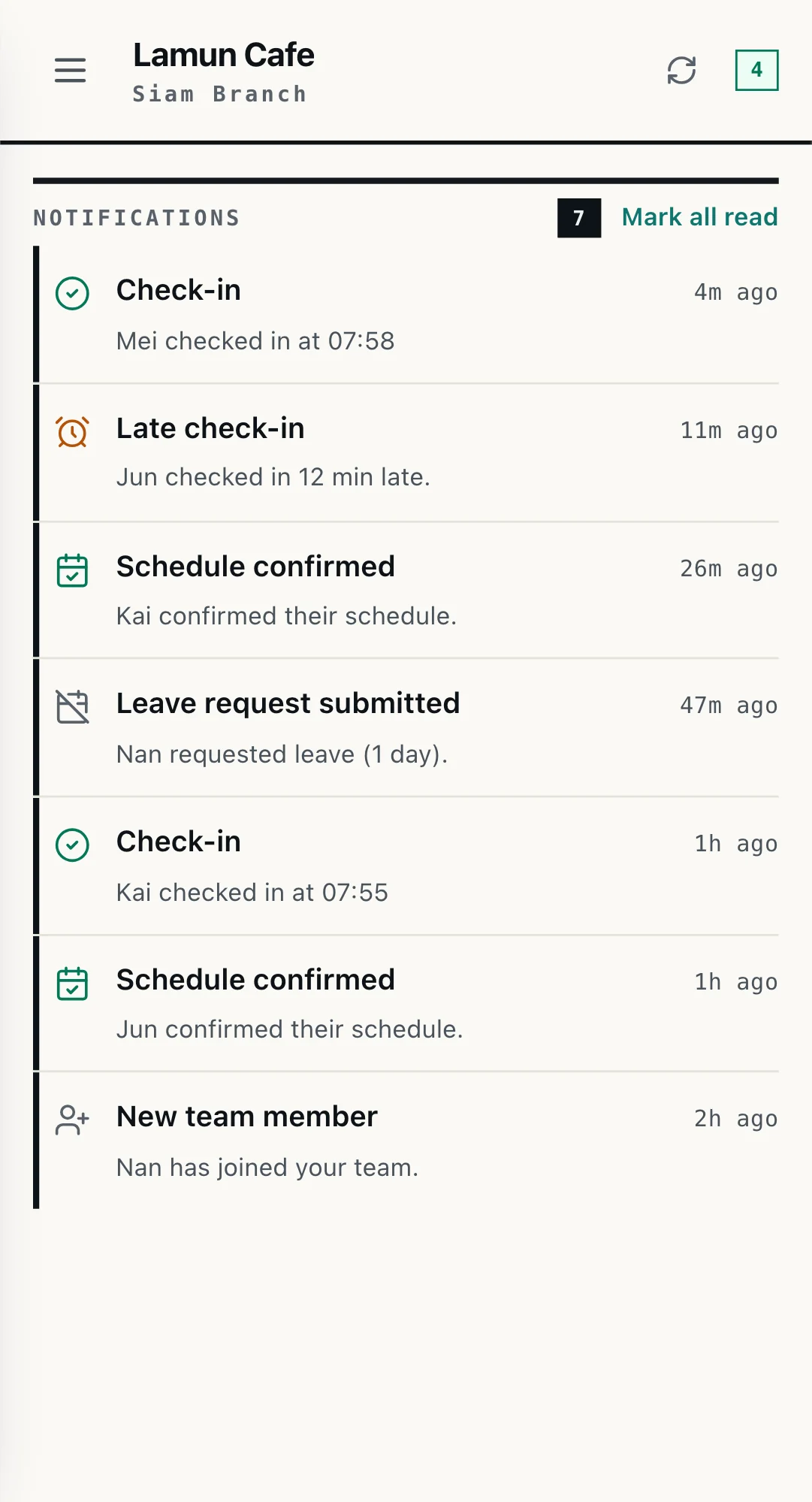
THE REAL SCREEN · NOTIFICATIONS
There is no dashboard to go and check. The work arrives on the phone: check-ins, shift confirmations and leave requests.
4. Where the category is going
The category is moving away from shrinking office software down to fit a phone, and toward designing from scratch around the actual shape of frontline work. Instead of starting with a dashboard and asking how to cram it onto a handset, it starts from the handset, the chat app and the rhythm of the shift, and builds up from there. So the winner of the next decade is not whoever has the most features. It is whoever understands how these 80% actually work, and builds to fit them.
WorkCo is one example of building for the 80%. We did not shrink an office HR system down onto a phone. We started from a question: where are frontline teams in Thailand already? The answer was LINE, so we put the schedule right inside it. Not a new place staff have to go to, but the place they already are every day.
Frequently asked questions
What is deskless workforce software?
It is software built for people who work on their feet rather than at a computer: retail staff, cooks, servers, nurses, cleaners, guards and riders. Instead of a login, a dashboard and a laptop, it reaches workers on the phone in their hand, in the flow of a shift, with almost nothing to learn.
Why doesn't office software just work for frontline teams?
Because it is designed around a fixed seat that the frontline does not have. Office software assumes the user has a desk, a laptop, downtime to fill in a form and an existing company account. The counter, the ward and the loading bay have none of those. The problem is not the worker, it is that the shape of the software does not match the shape of the work.
How big is the deskless workforce?
Roughly 80% of the global workforce, around 2.7 billion people, is deskless. Despite that scale, the vast majority of workplace software spend has gone to tools for the desk-bound 20%, which is why so many frontline teams still run on paper, spreadsheets and chat.
What do deskless teams actually need from software?
Three things. Reach them on the device already in their hand, usually a phone and often an app they already use daily. Ask them to learn nothing new. And fit the flow of the shift rather than adding a separate task after it. Anything that needs a laptop, a browser tab or a fresh login is built for the wrong worker.
Where is deskless workforce software heading?
Toward designing from scratch around the shape of frontline work. Rather than shrinking office software onto a phone, the category will start from the handset, the chat app and the rhythm of the shift, and build up from there. The winner is not whoever has the most features, but whoever understands how these 80% actually work and builds to fit them.
Want to see a tool built for the 80%?
WorkCo is scheduling designed for teams with no desk and no laptop, just the phone and the LINE they already use every day. Built to fit frontline work from the start. Free up to 15 staff.